Never Seen So Clear
A discussion on eating disorders and not thinking about myself so much.
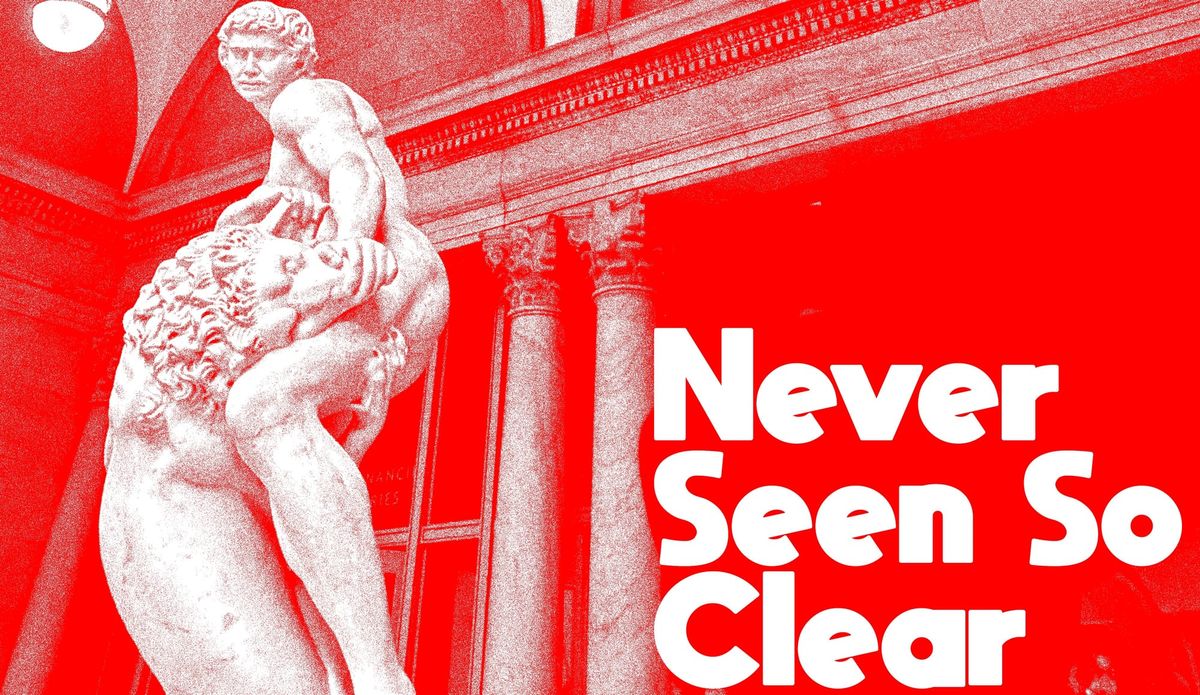
I’ve been to the Art Institute of Chicago dozens of times. I have a usual path. I know what’s in each room before I get to it. I went last Thursday, the first day of Lollapalooza and a day it was open until 8:00 PM. This time, I strayed from my route and went through the South Asian art first instead of walking up the stairs to Art of Europe Before 1900. I walked downstairs to a gallery featuring embroidery from Southwest Asia and North Africa that was beautiful and new to me, then I walked back up to where they were having a pop up with champagne in that gallery.
While I sat having my glass of champagne in front of the art, I thought of a younger version of myself. I used to go to the Art Institute all the time. It was free with my college ID and was open until 8 on Thursdays – back then it was every Thursday, now it’s mostly just in the summers and select other sponsored days. I’ll still go on Thursdays between 5 and 8, like I did last week, but now I’m older and walking there from my office job. The real difference is that when I was in high school and college and a little older I would walk through and spend the whole time thinking about myself. I’d wear shoes that clicked and clacked and I’d take photos of myself in gilded mirrors. I’d learn things about the impressionism pieces so I could tell people I went with little facts about Toulouse Lautrec and his cousin and Camille Pissarro. I developed hard opinions on Monet and Cezanne that I’ve never really spent time reassessing.
When I studied abroad in Paris I spent the whole time thinking about myself. I thought about how thin or pretty I thought I was at any given point. I took photos of myself in my apartment’s full length IKEA mirror and walked around and learned less than I should have.
Lately there has been a lot of discussion, both direct and indirect, of eating disorders. Ariana Grande’s body. Caroline Calloway’s glp-1 essay. Already thin celebrities becoming thinner.
Eating disorders are already difficult to discuss without the baggage of making drugs like Ozempic always about eating disorders just because celebrities are more visible. As an illness, Anorexia kills more people than any other mental illness. When I received treatment for my own eating disorder as a teenager I saw a 13 year old carted away after a cardiac event — they didn’t call it a heart attack but they did tell us that. I imagine in part to scare us, just not too bad. Certainly people who suffer from them deserve compassion, but I think very little of the version of myself who spent all day only thinking about other people in context of whether I was thinner than them or if they were looking at me. Sometimes that was through hating myself so much I hoped they wouldn’t, sometimes it was in the sort of sick way girls on tiktok will turn to the side to body check with the hope people will comment on how thin and enviable their bodies are.
This kind of shallow self obsession, even self obsession through self loathing, doesn’t do anything interesting. It just prevented me from learning much or putting myself into much of a position to succeed. It wasn’t about whether I liked myself or not. It made me feel incapable of talking to anybody. It consumed me. Even when I stopped being as deep into those behaviors, when I began recovering, it just morphed.
Nobody wants to talk about their eating disorder more or with more authority than someone who has just started recovering or just finally acknowledged their disorder is a problem. That’s why I don’t think there are really any responsible essays focused on eating disorders from someone who had one— including many I wrote when I thought I was recovered, but clearly wasn’t. Maybe I’m wrong, but I don’t know of anybody who wants to sit around waxing pathetic about their eating disorder behaviors and how, actually, it does feel better than anything else to be thin once they’re really out of it. I believe the last step of recovery is not thinking about your eating disorder, or at least not wanting to see it as this integral thing to who you are.
I don’t know that I think there are “responsible” ways to write about eating disorders unless it's unpleasant and honestly harsh toward yourself without trying to prove how much you suffered for the purpose of sympathy or envy. My eating disorder made me unpleasant and gross. It made me hard to be friends with and hard to date. It made me mean about everybody’s body, not just my own. It destroyed years of my memories. In snapshots of my life I’m thinking about my body instead of feeling any love for anybody around me. I’m grateful I started taking film photos because at least they hold a world that my brain doesn’t remember.
I feel some sympathy for the previous version of myself that was struggling, but I also feel a great deal of embarrassment and shame about how I thought about other people. Internally, I was incredibly mean because my value being linked to my body and weight also meant ascribing that value to other people. That’s not unique to me. It existed all over people in my treatment program. It’s not absent in people on ED Twitter or ProAna blog spaces. I feel shame about how poor I was as a friend. I’m ashamed I wasn’t able to be present enough to really set myself up to take advantage of the life I was lucky to have when I was younger. I hate that version of myself in a lot of ways and I think that’s reasonable. I forgive myself, I guess, but I don’t feel kinship to that person.
I think the thing that got me finally past my disorder was that feeling that there was no way for me to have a life I was proud of if I was still the girl walking through the art institute analyzing every woman in there to see if anybody was thinner than me.
When I go to an art museum now, like I did last week, I’m not thinking about myself the entire time and it’s better! It’s not something I’m really conscious of anymore, but it has given me a deeper feeling toward art. It’s given me so much just to not be thinking about me constantly.
Where I land with the cultural conversation is that I think it’s a shame to watch women visibly waste away. I also think entertainment is predatory and scrutiny will always push women into unhealthy behavior. That said, it’s ridiculous to act like people need to tip-toe around what they can see with their eyes. This is raising alarms because it’s obvious and nobody wants to watch someone die. If Ariana Grande is ill, regardless of what the illness is, she shouldn’t be performing the way she is, but the hemming and hawing is silly. People are allowed to express that something is clearly wrong.
It’s probably not gonna matter anyway. Until you want to recover you won’t.
Like Ted Leo said in the greatest song about eating disorders ever written, “all the bourgeois social angels / telling you you’ve got to change / don’t have any idea, they’ve never seen so clear.” You have to want to believe you have to change before you can.
I got out of eating disorder treatment before I found out if that kid survived her “cardiac event” but I hope she did. I hope she’s healthy and has learned to experience the world. I hope she’s learned to be honest with herself about what that disorder cheated her out of.
I hope she’s angry about it, too.
As A Side Note...
I don’t think the “Karen Carpenter died in recovery” narrative is that compelling from the perspective of “raising awareness” about how bad eating disorders are. When directed at people who know nothing, I guess it works illustratively, but I read about Ruslana Korshunova endlessly as a teenager. She was a martyr of sorts, the way Karen Carpenter is too. To kill yourself in what you think is a kind of divine pursuit of perfection is kind of the ultimate control over your body and life. It’s grotesque, but to be dead in exchange for being thin and beautiful and beloved— well that’s kind of what you want, at least for a while. It’s just horrible to see and it’s horrible to feel.
It kind of feels gross to keep bringing Karen Carpenter up for that reason. It strikes me the same place as a lot of people giving detailed accounts of acts of rape done by those Canadian hockey players who returned to the NHL or AHL. I know it comes from a good place, but I’m not sure to what end. Kind of just feels like engaging in viscera for the righteous discomfort of people who already agree with you. I think there are ways to ensure those things aren’t forgotten that aren’t a dramatic retelling of horrible things done to a real person.
I think there is so much tragedy in Karen Carpenter even if she hadn’t died, but we wouldn’t discuss her in that context if she hadn’t. To live with an eating disorder like that is horrible and ugly and painful. I think there is tragedy in watching Ariana Grande — and so many other celebrities — shrink to a level that is certainly unpleasant. To be in any deep level of mental illness is horrible and traumatic. To watch it is too.
Not much else to say other than it’s a shame.
Miranda Reinert is a music adjacent writer, zine maker, podcaster and law school drop out based in Chicago. Check out PDFs of most of my zines at the link on the top of the blog. Follow me on Twitter or Bluesky: @mirandareinert. This blog does have a paid option and I would so appreciate any money you would be willing to throw me! You may also send me small bits of money at @miranda-reinert on venmo/on Paypal if you want. As always, thanks for reading!

Comments ()